But one of his disciples, Judas Iscariot, who was later to betray him, objected, “Why wasn’t this perfume sold and the money given to the poor? It was worth a year’s wages.” He did not say this because he cared about the poor but because he was a thief; as keeper of the money bag, he used to help himself to what was put into it. – John 12:4-6 NIV
Most people have hopes and dreams. They have prayers and plans, preferences and passions. They motivate us, spur us on, dictate the way we interact with the world. To say that our desires influence our actions would be obvious. But very few individuals long to play the role of villains. And fewer still aspire to be a traitor.
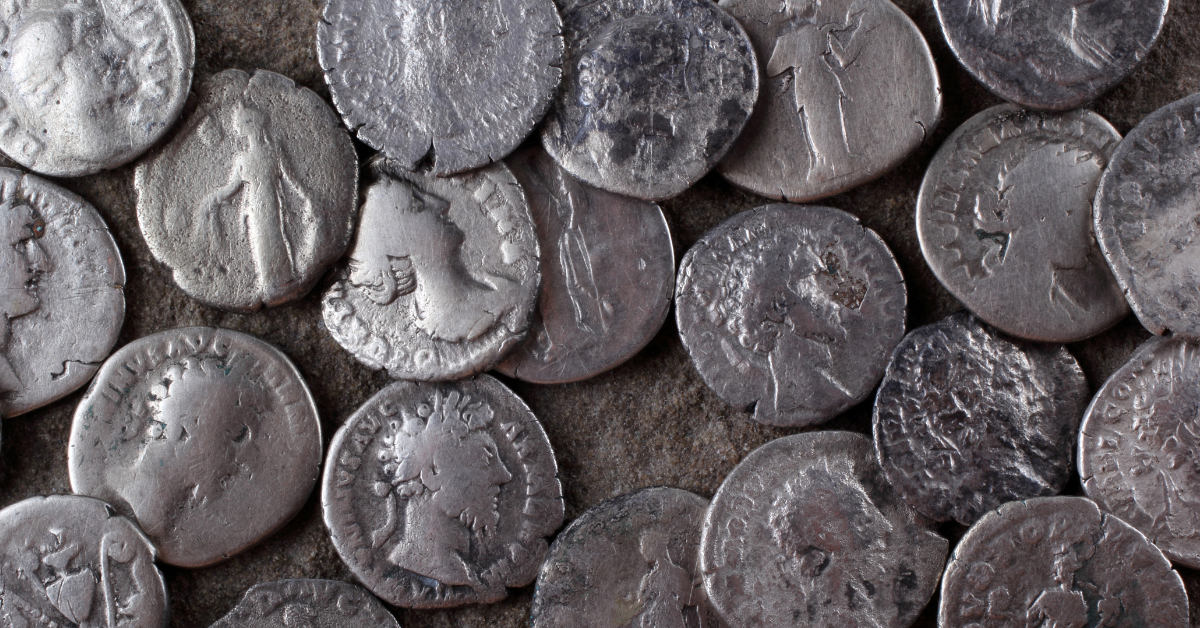
That is what Judas is known for. He betrayed Christ. Thirty pieces of silver and a kiss to get rid of Jesus of Nazereth. Thirty pieces of silver was the price paid to murder Emanuel. It was an act of sheer and unforgivable evil.
The Apostle John knew it. He knew it from the time Judas started stealing money from the group treasury. John knew it when Judas made a snide remark about wasting money on expensive perfume. Of course the betrayer was the guy who dipped his bread the same time as Jesus. Of course it was Judas.
But what was evident to John may not have been quite as clear to Judas. What was Judas thinking when he took a coin from the treasury for the very first time? Was it ardor for money that led him to break one of the ten commandments or was it desperation and shame about an everyday problem that just one little coin could fix? Was it distrust in Jesus that led him to take matters into his own hands? Did he lack faith in his Teacher, his Lord?
The first coin was a single step. Nothing challenging, except for carrying a little guilt. No big deal. Except that shame grows in darkness. And darkness is voracious. It led to the next coin. The next secret. Until the shame, the darkness, the secret could not be contained. It screamed of Judas’ failure to the whole group. John knew. Everyone knew. Judas was helping himself to the money in the treasury. He was a thief. He was the villain. He would soon become the ultimate traitor.
In between being a thief and becoming a traitor to Him, Jesus washed Judas’ feet. Christ waited for Judas to come to Him. He watched Judas with heartbreak. Jesus Christ longed for Judas to bring his guilt and shame to Him and He longed to forgive him. To free Judas of his sin.
But Judas had walked so very far with shame as a companion instead of Jesus by then. Guilt had by that point grown so strong and mighty that Judas felt tiny beside it. Judas was consumed. We cannot know what Judas thought when he sought out the chief priests. We only know that Judas no longer heard the Word of God.
If he had looked Christ in the eye, he would have seen love. If he had listened, he would have heard mercy. If he told Christ about his guilt, he would have been forgiven. If only he had asked.
He didn’t. He let secrecy and guilt grow bigger than God. He sank in the darkness instead of grasping for Christ. The steps he took in his desperation led him from the petty thievery of meager coins to the sale of his soul for 30 pieces of silver.
In the end, Judas was broken by his own act of ultimate betrayal. While Jesus was being beaten, Judas sought to run from the burden that the pouch of silver had become. He could not carry his sin alone. And while he sank into despair, while he took his own life over the guilt of his sin, Christ was preparing to give His life for the sins of all men. Judas had heard the words all the other Apostles had. Judas was listening when Christ said He would be killed and would rise again on the 3rd day. Judas heard, but he didn’t understand. Judas died in doubt and desperation, believing more in the label “traitor” than blood of Christ’s redemptive work, the blood Christ would be shedding for the sins of all mere hours after Judas’ death.
And Judas was not irredeemable. Although he buried himself in guilt, he was never beyond God’s reach. He was disbelieving. His faith was in his shame and rooted in his fear. He misunderstood God’s word and doubted God’s love. He never understood the simple truth: “For God so loved the world that he gave his one and only Son, that whoever believes in him shall not perish but have eternal life. For God did not send his Son into the world to condemn the world, but to save the world through him.” (John 3: 16-17).
In the end, Judas made his shame greater than the infinite mercy of God. He made his fear greater than God’s Love. And he made the price of his sin greater than the sacrifice Christ paid to redeem it.
It never is. No sin is greater than the price Jesus paid to cleanse you of it. Judas’ sin wasn’t. Yours isn’t. Mine isn’t. And yet, salvation cannot be earned. The grace of God is a priceless treasure yet it is a free gift and one He is eager to give to any and all who would receive it. Come to Christ. He has paid the cost of your sin with His blood and asks only that you trust in Him.
Written by Janet Keefe
(Inspired by Alivia McKeen)